What is ESS?
Leave a message
Energy storage is a cyclic process of storing one form of energy in the same or converted to another form of energy through a medium or device, and releasing it in a specific form of energy based on future application needs. According to the energy storage form to divide, energy storage includes electric energy storage, thermal energy storage and hydrogen energy storage, of which electric energy storage is the most dominant energy storage mode. In electric energy storage, it is further divided into electrochemical energy storage and mechanical energy storage according to the different storage principles. Electrochemical energy storage refers to secondary battery energy storage, including lithium-ion batteries, sodium-ion batteries, lead storage batteries and liquid flow batteries. Mechanical energy storage includes gravity energy storage, pumped storage, compressed air energy storage and flywheel energy storage.
Each technology path has its own advantages and disadvantages and is suitable for different application scenarios. Electrochemical energy storage is more flexible in terms of rated power and stored power, and is mainly used for new energy consumption, peak-valley spread arbitrage, power system peaking and frequency regulation, and UPS. Mechanical energy storage generally has a long life, but the response time is significantly slower than electrochemical energy storage and electromagnetic energy storage, and mainly used in the field of power system peaking.
Electrochemical energy storage means that the mutual conversion between electrical energy and chemical energy is completed through electrochemical reactions, thus realizing the storage and release of electrical energy. At present, the main applications of energy storage batteries mainly include lead-acid batteries, liquid flow batteries and lithium-ion batteries.
(1) Lead-acid battery is a kind of secondary battery with lead dioxide as the positive electrode, metallic lead as the negative electrode and sulfuric acid solution as the electrolyte. Lead-acid batteries have been developed for more than 150 years and are the first secondary batteries used on a large scale. Lead-acid battery has low energy storage cost, good reliability and high efficiency. It is widely used in UPS and was the dominant technology route for early large-scale electrochemical energy storage. However, because of the short cycle life, low energy density, narrow temperature range, slow charging speed, and the environmental impact of lead metal, the future application of lead-acid batteries will be greatly restricted.
(2) Liquid flow battery technology path includes all-vanadium liquid flow battery, iron-chromium liquid flow battery, zinc-bromine liquid flow battery, etc.. Among them, the all-vanadium liquid flow battery has the best comprehensive performance and the highest commercialization level. The positive and negative electrolyte tanks of the liquid flow battery are separated independently and placed outside the stack. The positive and negative electrolytes are pumped into the liquid flow battery stack by two circulating power pumps through the pipeline, and electrochemical reactions occur continuously, and the chemical energy is stored and released by converting the chemical energy to electrical energy. The power of liquid flow battery depends on the size of electrode reaction area, and the storage capacity depends on the volume and concentration of electrolyte, so the design of liquid flow battery size is more flexible. We believe that in the long term energy storage, all-vanadium liquid flow battery will have the cost advantage, and has a competitive advantage over other technology paths such as lithium batteries.
3) Lithium-ion batteries achieve energy storage through the embedding and de-embedding of lithium ions in the positive and negative electrode materials. Lithium-ion batteries have high energy density and long life, so they are gradually becoming the mainstream route for electrochemical energy storage. According to the different cathode materials, lithium-ion batteries are divided into lithium cobaltate, lithium manganate, lithium iron phosphate and ternary batteries.
Lithium iron phosphate batteries have significant advantages in the field of energy storage, with moderate energy density, better safety and service life than other battery types, and lower cost. Lithium cobalt acid battery because of the scarcity of metal cobalt price is much higher than other batteries, and cycle life, safety is poor, so there is no application in the field of energy storage. Lithium manganate battery energy density and lithium iron phosphate battery is similar, although the price is lower than lithium iron phosphate, but the low life cycle cost of electricity than lithium iron phosphate battery, so the application is less. Ternary batteries have a much higher energy density than other battery types, and their service life can reach 8-10 years. However, the safety is relatively poor, and the cost is much higher than lithium iron phosphate batteries. Therefore, in the field of energy storage does not require very high energy density, the application prospects are weaker than lithium iron phosphate batteries.
Customer side: peak-valley price arbitrage and capacity cost management provide clear revenue model
Energy storage is used for peak and valley tariff arbitrage, allowing users to use stored energy to store electricity during the valley period when electricity prices are low. In the peak period, the stored energy can be used to avoid the direct and large-scale use of high-priced grid electricity, thus reducing the cost of electricity use and realizing peak and valley tariff arbitrage.
The current global and Chinese power system energy storage are dominated by new energy distribution and storage, power auxiliary services, and grid-side energy storage. Among them, the global three accounted for 33%, 37%, 24%, a more balanced distribution. China is 45%, 29% and 22% respectively, with new energy distribution and storage accounting for a significantly higher percentage than other scenarios.
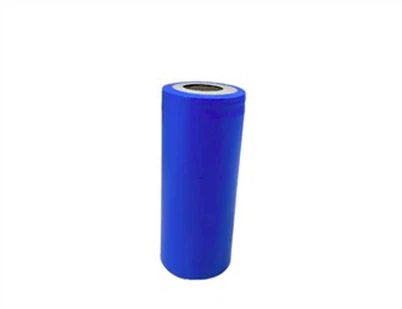
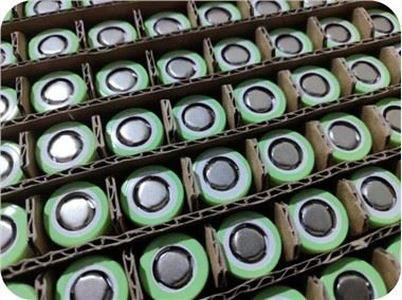
Based on the huge scale of energy storage in the Chinese market, GBM has provided high-quality lithium iron phosphate cells and battery systems for several projects. Energy Storage Market products are applied to mobile energy storage charging cabinets, campus energy storage cabinets and other energy storage markets. It can make use of valley and flat period charging to make greater use of peak-valley price difference, easy installation, operation and maintenance, long service life, and achieve sustainable development. At the same time, the trinity of "electric commercial vehicle fast charging, park energy storage and frequency regulation, and emergency disaster recovery" will provide energy security for the construction of urban electrification.Tested by time and working conditions, our cells can perfectly match the components of energy storage systems and work stably under a variety of complex conditions.
To learn more about our solutions or products, please contact us at:
related product:
https://www.optimum-china.com/energy-storage-battery/powerwall-lithium-battery-for-home-energy.html