

What is LiFePo4 Battery
The lithium iron phosphate battery or LiFePo4 battery is a type of lithium-ion battery using lithium iron phosphate as the cathode material, and a graphitic carbon electrode with a metallic backing as the anode.
Benefits of LiFePo4 Battery
Lithium has a long lifespan
LiFePo4 battery live up to 5000 cycles at 80 percent depth of discharge, without decreasing in performance. The average lifetime of lead-acid batteries is just two years.
No active maintenance
LiFePo4 battery (LiFePO4) don't require active maintenance to extend their service life. Also, the batteries show no memory effects and due to low self-discharge (<3% per month), you can store them for a longer period of time. Lead-acid batteries need special maintenance. If not their life span will be decreased even more.
Lightweight champion
LiFePo4 battery (LiFePO4) offer high power density which causes lithium batteries to be relatively small and light. Compared to lead-acid batteries lithium provides great energy density and are at least half the mass. Go for lithium if you want to reduce concerns about battery weight and size!
High efficiency
LiFePo4 battery (LiFePO4) have 100% of their capacity available. Additionally, their fast charge and discharge rates cause them to be a great fit for all sorts of applications. Fast charging reduces any downtime and increases efficiency. High discharge pulse currents deliver bursts of power in a short amount of time.
Safety
To achieve high safety with our batteries, we use only the highest quality cells of the safest technology available today: lithium iron phosphate (LiFePO4 or LFP). In combination with our Battery Management System (BMS) developed by our innovative engineering team, we can guarantee the safety and reliability of our batteries.
High discharge rates
LiFePo4 battery are specially developed to handle high discharge currents. You can start easily heavy engines or use several electrical devices at the same time on your boat or RV.
Extreme temperatures
Lithium iron phosphate (LiFePO4) can operate in a wide temperature range, which makes lithium batteries a good fit for various applications, including ones that undergo extreme temperatures. Lithium is the best option for applications that will exhaust the batteries or run in extreme weather conditions.




Why Choose us
Quality Assurance
The products have passed Quality Supervision and Inspection Center of Chemical Physics Power Products, Ministry of Information Industry, 863 Program Laboratory, National Car Quality Supervision and Inspection Center, and meet the safety and environmental protection requirements of CE, UL, UN38.3, CB and so on.
Reputation
A company with a positive reputation is more likely to attract customers. Reputation is built through consistent quality service or products, good customer relations, and reliability.
Customer service
The company offers excellent customer service and support, making it easy for customers to resolve any issues they may have with the product.
Application of LiFePo4 Battery
Application of the new energy automobile industry
LiFePo4 battery are widely used in passenger cars, buses, logistics vehicles, low-speed electric vehicles, etc. due to their safety and low-cost advantages. Although, in the current new energy passenger vehicle field, it is subject to the state's subsidy policy for new energy vehicles. Influence, relying on the advantages of energy density, ternary batteries occupy a dominant position, but liFePo4 battery still occupy an irreplaceable advantage in fields such as passenger cars and logistics vehicles. In the field of passenger cars, liFePo4 battery remain mainstream. In the field of special-purpose vehicles, the proportion of liFePo4 battery is gradually increasing. The use of liFePo4 battery in the extended-range electric vehicle market can not only improve the safety of vehicles, but also support the marketization of extended-range electric vehicles, eliminating the anxiety of pure electric vehicles such as mileage, safety, price, charging, and subsequent battery issues.
Start the application on the power supply
In addition to the power liFePo4 battery characteristics, the starter lithium iron phosphate battery also has the ability of instantaneous high-power output. The traditional lead-acid battery is replaced by a powerful liFePo4 battery with an energy of less than one kilowatt-hour, and the traditional starter motor and generator are replaced by a BSG motor. , It not only has the function of start and stop at idle speed, but also has the functions of engine stop coasting, coasting and braking energy recovery, acceleration assist, and electric cruise.
Application of energy storage market
Lithium iron phosphate battery has a series of unique advantages such as high working voltage, high energy density, long cycle life, low self-discharge rate, no memory effect, and green environmental protection. It also supports stepless expansion and is suitable for large-scale electric energy storage. Energy power stations have good application prospects in such fields as safe grid connection, grid peak shaving, distributed power stations, UPS power supplies, and emergency power systems. With the rise of the energy storage market, in recent years, some power battery companies have deployed energy storage business to open up new application markets for lithium iron phosphate batteries. On the one hand, due to the characteristics of ultra-long life, safe use, large capacity, and environmental protection, lithium iron phosphate can be transferred to the energy storage field, which will extend the value chain and promote the establishment of new business models. On the other hand, energy storage systems supporting lithium iron phosphate batteries have become a mainstream choice in the market. According to reports, liFePo4 battery have tried to be used in electric buses, electric trucks, user-side, and grid-side frequency modulation.
Applications in other fields
LiFePo4 battery is also widely used in the special field because of its good cycle life, safety, low-temperature performance, and other advantages.
LiFePO4 Battery Cells in Different Shapes

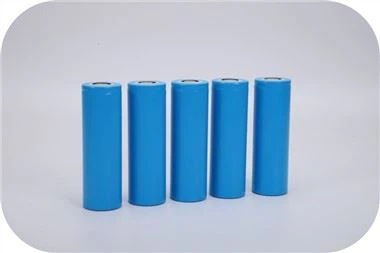
Cylinder Cell
Cylinder cell is the most traditional and the oldest, but also the safest technology. Because of the round shape, the internal pressure is equally shared on the surface, and the heat dissipation is better. Due to the mature automated production line and technology, cylinder cell is much safer, more efficient, and more consistent.
A cylinder cell is quite small, an 18650 is generally around 2200mAh. Mostly, the capacity is calculated in mAh. Other size models are 18650, 26650, 32650, and so on.
It is always used in small mobile applications. Such as power banks, drones, flashlights, electric toys, electric tools, digital electronics, and other small portable power systems.
Prismatic cells are more suited because the required quantity of the battery cells will be much smaller.

Prismatic Cell
Prismatic cells are popular because of their high capacity and square shape. Anyone can easily connect 4 cells in series to create a 12V battery pack. For example, a 12V100Ah, or the currently popular EVE 3.2V280Ah, can build a 12.8V280Ah battery pack. Or, you can even make a 48V280Ah battery system with 16 cells.
The battery pack of prismatic LiFePO4 cells will be more stable because there are fewer cells in the pack, and the BMS can independently work for each cell.
Prismatic cells are widely used in energy storage applications. As the energy density of LiFePO4 is not as high as NMC cells, there is a weakness in mobile applications. But in stationary energy storage systems, it is not a key factor.
Moreover, in power applications, due to the outstanding cycle life of LiFePO4 batteries, more and more companies choose LiFePO4 battery cells in low-speed vehicles, AGVs, cleaning machines, and the current EVs.

Pouch Cell
Pouch cell, cylinder cell, and prismatic cell, there is very little difference between the positive and negative electrode materials and separators. The biggest difference is the packaging material.
The main feature of the pouch cells is the aluminum-plastic shell instead of metal, which means it is not that heavy and has a higher energy density than the above two types. But relatively, it is easier to be damaged, not that strong in impact resistance. If we make it into a battery pack, the case protection must be good.
The aluminum-plastic film packaging is flexible. When a safety problem appears, the pouch cell will bulge and break, but it will not explode or get on fire.
Shapes of pouch cells can be customized. Shapes can be tailor-made to maximize battery compartment space and increase battery capacity.
It is used in smartphones, drones, wearable devices, the automotive industry, the military field, etc.
Factors to Consider When Buying LiFePO4 Battery
Capacity
The capacity of a battery represents how many appliances it can power and for how long. It is measured in Watt hours (Wh). The capacity is the primary factor to consider and the main factor that drives up the LiFePO4 battery cost.
Users often get confused when they cannot see a Wh rating mentioned on the battery. Instead, they find voltage and Amp hours (Ah) ratings.
hat is alright. You can find the Wh rating by multiplying voltage and amp hours.
Wh = V x Ah
For a 12V battery with a 320 Ah rating, the Wh will be:
Wh = 12 x 320 = 3840 Wh
To find out how much capacity you need, you can add the wattage of all the appliances you use. Then you can multiply it by the hours you want to run them without charging the battery. This will give you the minimum watt hours of the lithium-ion batteries you should buy.
For instance, if you want to run a total of 300W load for 10 hours, you require a minimum of:
Minimum Wh = 300 x 10 = 3000 Wh
Since the load or running time can increase or decrease, the required battery should have more capacity than the minimum Watt hours you require. Therefore, the 3840 Wh battery will be a good fit for the 3000 Wh minimum capacity.
Value For Money
Many users focus on ‘price’ as the deciding factor. However, a better factor to consider should be the value for money of the battery.
Lead acid batteries are the cheaper option in the market today. However, their lifespan is only one-tenth that of a LiFePO4 battery. While LiFePO4 batteries can last over 10 years, a lead acid battery will run out after a year or so. Additionally, there is always the risk of cheaper batteries running out while on the job.
Therefore, opt for value for money instead of the price as the deciding factor. It can save you countless trouble in the long run. This brings us to our next important criterion.
Battery Life
It is essential to consider how many years a battery will last. You can save money and buy lead-acid batteries if you want a short fix for a few months. However, most users do not want that. Instead, they require a long-term solution.
A LiFePO4 battery is the best option in terms of battery life. A good quality LiFePO4 battery will easily last upward of 10 years. AGM and conventional lithium-ion batteries can work well for three to four years.
Cycle Life
Cycle life means the number of charge and discharge cycle that your battery can undergo. A longer cycle life means a battery will last longer. Batteries do not come with a suggestive lifespan on the box. However, they do mention a cycle life. Choose an option with a longer cycle life for a better return on investment.
Warranty
Warranty is a good indicator of the build quality of the battery and its lifespan. Lead acid batteries come with a 6-month warranty. Therefore, they are workable for up to a year until they demand replacement. LiFePO4 battery is a whole different game.
You will find different kinds of warranty periods with different LiFePO4 manufacturers. Eco Tree Lithium is the leader in the game as it provides a warranty of an astonishing 6-year. You can expect the Eco Tree Lithium batteries to easily work for over 10 years with a warranty like that.
Depth of Discharge (DoD)
Depth of Discharge (DoD) is a significant factor that makes people switch from existing lead acid batteries to lithium iron phosphate batteries. Depth of discharge denotes the usable capacity of the battery.
For instance, the depth of discharge for lead acid batteries is 50%. Therefore, you can use these batteries to 50% of their capacity. After that, they will require charging. However, for Eco Tree Lithium's LiFePO4 battery, the DoD is a whopping 100%. You can use LiFePO4 through the full rated capacity.
Maintenance Requirements
Every battery has a distinct maintenance requirement. Lead acid batteries have many requirements like electrolyte top-ups and venting the buildup gases. Fortunately, maintenance of LiFePO4 battery is much simpler and easy.
Dimensions
Battery dimensions are important for applications like motorhomes. The battery compartments can accommodate a particular size battery bank. LiFePO4 battery has prefixed size groups to denote the standard size of the battery. Match the lithium battery group with your requirement.
Weight
Weight is not always on the priority list of important parameters. However, some users find having a lighter battery preferable. If that is the case, any lithium battery is a better buy over a lead acid battery. For instance, a lead acid battery pack of 500 Ah can weigh around 850 kg. The same job can be done by a 250 Ah lithium-ion battery weighing 210 kg. This means a considerable difference in weight.
The main differences come from the eliminated weight of lead plates and electrolytes. Additionally, lithium iron phosphate batteries have lighter electrodes.
Safety
Safety becomes essential when you operate your battery near life and property. There have been instances where lead acid battery leak fluids that cause corrosion of the battery and nearby appliances. Conventional lithium batteries have fire and explosion hazards with them. However, lithium iron phosphate batteries are made using very stable compounds of iron and phosphate. These will never explode or cause fire injury.
Voltage Rating
The voltage of the battery pack is important because it determines its usability. For instance, you cannot replace a 24V battery with a 48V battery and vice versa. Every type of voltage rating has a distinct application, advantage, and disadvantage. If you are replacing your old batteries, you will need to find old voltage rating and match new batteries with the same rating for a constant voltage.
Cold Weather Usage
All batteries are known for performance stuttering in extreme temperatures. Freezing conditions can lead to battering running flat. These batteries often do not recover once the temperature toll takes place. Therefore, find the optimal temperature range of the battery.
Features
Modern batteries come with many features that add to the convenient user experience. Take the case of this battery. It has a Bluetooth feature to check your battery stats remotely. You do not have to open the battery compartment. You don't have to use a multimeter to check the voltage and current parameters. You can manage the battery remotely from a Bluetooth device.
Other secondary features can include LED indicators for the charging system. Having a handle to transport the battery is also a handy feature to have.
Lifepo4 Battery Maintenance
Charging the battery
When charging your Lifepo4 battery, it is essential to use a charger that is specifically designed for these batteries. Avoid using a charger that is designed for other types of batteries as it can damage your Lifepo4 battery.
It is also important to charge the battery slowly and avoid overcharging it. Overcharging can cause the battery to overheat, which can damage the battery and reduce its lifespan.
Discharging the battery
Lifepo4 batteries should not be discharged completely as it can damage the battery and reduce its lifespan. It is recommended to keep the battery charged between 20% and 80% to ensure optimal performance and a longer lifespan.
Storage
When storing your Lifepo4 battery, it is important to store it in a cool and dry place. Avoid storing the battery in direct sunlight or in a hot environment as it can damage the battery and reduce its lifespan.
It is also recommended to store the battery with a charge of between 20% and 80%. If you plan to store the battery for an extended period, it is recommended to charge it to 50%.
Temperature
Lifepo4 batteries perform best at temperatures between 20°C and 25°C. If the battery is exposed to temperatures outside this range, it can damage the battery and reduce its lifespan.
Avoid exposing the battery to extreme temperatures such as freezing temperatures or temperatures above 60°C.
Cleaning the battery
Regular cleaning of the battery terminals is essential to ensure optimal performance. Use a soft cloth or brush to clean the terminals and avoid using harsh chemicals or abrasive materials as it can damage the battery.
Jiangsu OptimumNano Energy Co., Ltd. is a professional cylindrical lithium iron phosphate (LiFePO4) battery technology and production capacity platform. We adhere to the "LiFePO4" technical route, focusing on five core application areas: commercial vehicle electrification, energy storage, ship electrification, agricultural machinery electrification, and high-end lead-acid replacement. With a professional team with over 20 years of expertise in LiFePO4 battery technology, products, and processes, we are committed to becoming a more professional LiFePO4 battery technology and production capacity platform. Our independently developed 32800, 38121, and 46800 standard cells feature safety, fast charging, low temperature, and advanced processes, using Tesla's automotive-grade cylindrical cell technology and fully automated production equipment. With an innovative service concept of "serving complete vehicle manufacturers through collaboration with localities, material suppliers, equipment manufacturers, universities, and research institutions," we are dedicated to becoming a more professional LiFePO4 battery technology and production capacity platform.

Company Honor
Jiangsu OptimumNano strictly implements fully automatic production standards for vehicles, such as ISO9001: 2015 Quality Management System, IATF16949: 2016 Quality Management System for Automobile Industry and ISO14001: 2015 Environmental Management System, etc.


