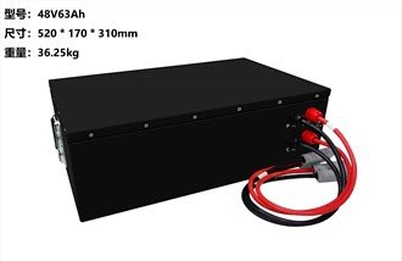
Lithium Ion Battery Characteristics
Leave a message
Lithium is the smallest and most active metal in the chemical periodic table. Small size, high capacity density, widely welcomed by consumers and engineers. However, if the chemical properties are too active, it will bring high risk. When lithium metal is exposed to the air, it will produce a fierce oxidation reaction with oxygen and explode. In order to improve safety and voltage, scientists have invented materials such as graphite and lithium cobalt oxide to store lithium atoms. The molecular structure of these materials forms a nano scale fine storage lattice, which can be used to store lithium atoms. In this way, even if the battery shell breaks and oxygen enters, the oxygen molecules are too large to enter these small storage cells, so that lithium atoms will not contact with oxygen and avoid explosion. This principle of lithium-ion battery enables people to achieve high capacity density and safety at the same time.
When a lithium-ion battery is charged, the lithium atom of the positive electrode will lose electrons and oxidize to lithium ions. Lithium ions swim to the negative electrode through the electrolyte, enter the storage cell of the negative electrode, obtain an electron, and reduce to lithium atoms. When discharging, the whole procedure is reversed. In order to prevent short circuit due to direct contact between the positive and negative electrodes of the battery, a diaphragm paper with many fine holes will be added in the battery to prevent short circuit. Good diaphragm paper can also automatically close the pores when the battery temperature is too high, so that lithium ions can not pass through, so as to waste martial arts and prevent danger.