

LiFePO4 Battery Charging Discharging and Use
Leave a message
As solar energy and energy storage systems become more widespread worldwide, choosing a safe and reliable battery is increasingly important. LiFePO₄ (Lithium Iron Phosphate) batteries are widely used in solar street lights, energy storage systems, and UPS power supplies due to their high safety, long lifespan, and stable performance.
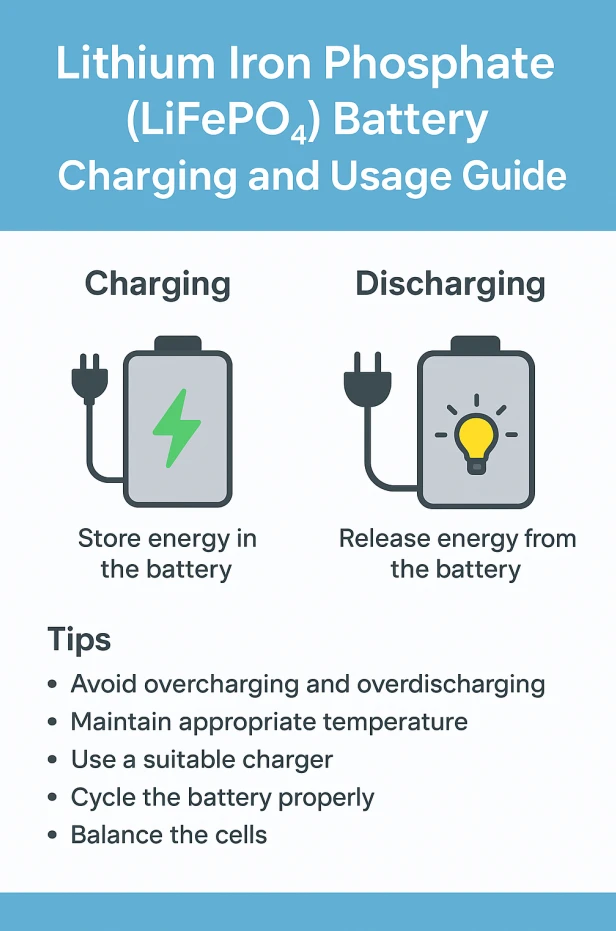
What are Charging and Discharging?
Charging: Storing electrical energy in the battery. LiFePO₄ batteries are usually charged with a constant current at first. Once the voltage reaches the upper limit, the current gradually decreases until the battery is fully charged.
Discharging: Releasing the stored energy to power devices. To prolong battery life, it is recommended not to discharge the battery completely, usually leaving around 20% of the capacity.
Important Points for Charging and Discharging
Avoid Overcharging and Overdischarging: Overcharging can cause overheating, while overdischarging may damage the battery and reduce its lifespan.
Maintain Proper Temperature: Charge and discharge within 0–45°C. Too cold or too hot conditions can affect battery performance.
Use the Right Charger: A dedicated LiFePO₄ charger is recommended for safety and efficiency.
Keep Batteries Balanced: When using multiple batteries in a pack, a Battery Management System (BMS) ensures each cell stays balanced.
Long Cycle Life, But Don't Overuse: LiFePO₄ batteries are durable and can last 2,000–5,000 cycles. However, frequent full charges or deep discharges accelerate aging.
Conclusion
LiFePO₄ batteries are safe, durable, and easy to use, making them ideal for solar lighting, home energy storage, industrial equipment, and electric vehicles. With proper charging, discharging, and maintenance, you can maximize battery performance and ensure your devices run reliably and longer.


